The Essential Spring Eavestrough Cleaning Guide for Fredericton Homeowners
The spring melt is the ultimate test for your home’s drainage. Learn how to clear winter sludge, spot snow damage, and protect your foundation before the heavy Fredericton rains hit.

As the snowbanks finally disappear from our yards in New Maryland and Skyline Acres, every Frederictonian knows what’s next: the rain.
Spring in the capital is a high-stakes season for your home. Between the heavy “winter grit” washed off your shingles and the early-season debris from our local maples, your eavestroughs are likely packed with a heavy, wet sludge. If that mess isn’t cleared before the first major thunderstorm, that water has nowhere to go but into your foundation or behind your fascia boards.
If you’re planning to tackle the ladder this weekend, follow this localized guide to get your system ready for the big spring melt.

1. Safety First (Watch the Ground!)
In Fredericton, spring ground is notoriously soft and “mushy” as the frost leaves the soil.
-
Ladder Stability: Before you climb, ensure your ladder is on a solid, level surface. If you’re working on a sloped lot in the Hill Area, use a ladder stabilizer or have a spotter.
-
Protect the Gutter: Never lean your ladder directly against the eavestrough; the weight can easily dent or bend the aluminum.
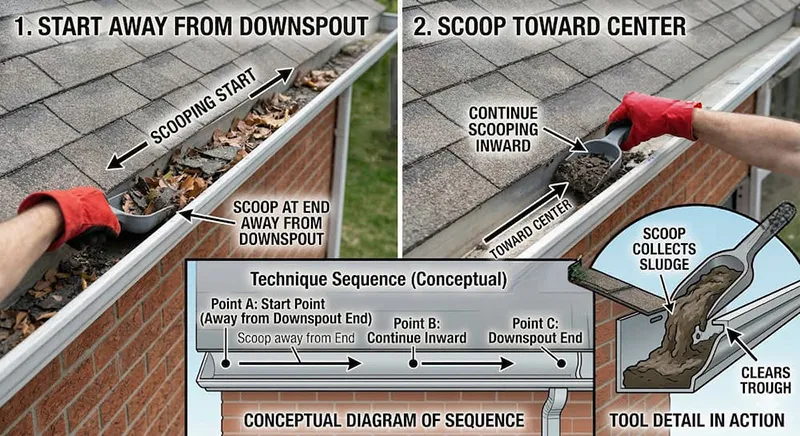
2. Clear the “Winter Sludge”
Winter storms often blow a surprising amount of asphalt shingle granules into your troughs. Mixed with leftover fall leaves, this creates a heavy “sludge” that water cannot move.
-
Scoop Toward the Center: Always start away from the downspouts and scoop the debris into a bucket.
-
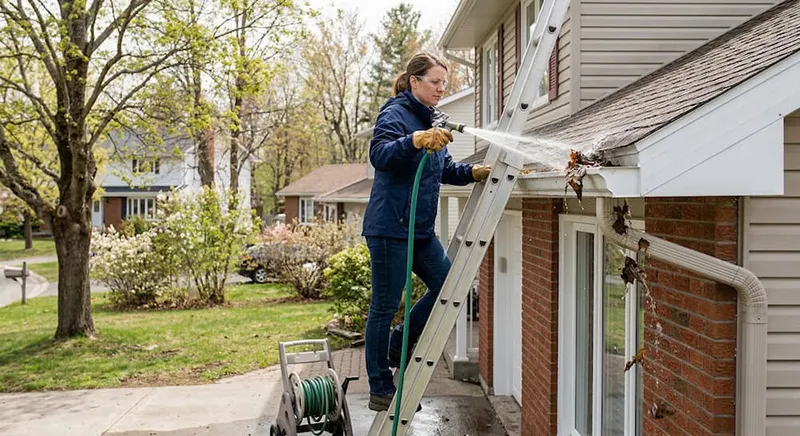
Don’t Blast Yet: Do not use a high-pressure hose to clear bulk debris—you’ll just pack the clogs deeper into your downspouts, making them much harder to clear.
3. The Maple Seed Factor
We love our mature trees, but right now they are dropping “helicopters” and seeds that act like a strainer for your gutters.
-
Check the Elbows: Even if the straight runs of your gutters look clear, the elbows of your downspouts are where these seeds congregate.
-
The Flush Test: Run a garden hose from the top. If the water doesn’t come out the bottom at full speed, you have a clog in the pipe that needs to be cleared before the heavy May rains arrive.
4. Inspect for “Spring Sag”
The weight of New Brunswick snow is no joke. While you’re up there, check the structural health of your system:
-
Look for Gaps: If there is space between the gutter and the wood (the fascia), winter ice has likely pulled your hangers loose.
-
Check the Pitch: Water should never “pond” in the middle of a run. If it does, your system needs to be re-pitched to ensure it flows toward the downspouts.
-
Downspout Extensions: Make sure your extensions are still attached. With our clay-heavy soil, you want that water discharging at least 6 to 10 feet away from your foundation.
Tired of the Ladder?
Let’s be honest: cleaning eavestroughs is a messy, dangerous chore, especially on two-story homes.
If you want to make this the last year you ever spend your Saturday on a ladder, Simply Seamless can help. From professional cleaning and repairs to installing high-quality, “set-it-and-forget-it” leaf guards, we make sure your home stays dry without the DIY headache.
Contact Simply Seamless and Request your Free Spring Estimate in Fredericton today!